
I’d like to spend five minutes convincing to try wild camping and tell you why it’s good for you. I’ve been doing it for many years and it’s helped me get through a nervous breakdown, a number of family members dying, stress of running a company, depression and the trauma of having a brain haemorrhage. If I can be the one who gets you to try camping in the wild and find that it helps you navigate life a little better, it would please me no end.
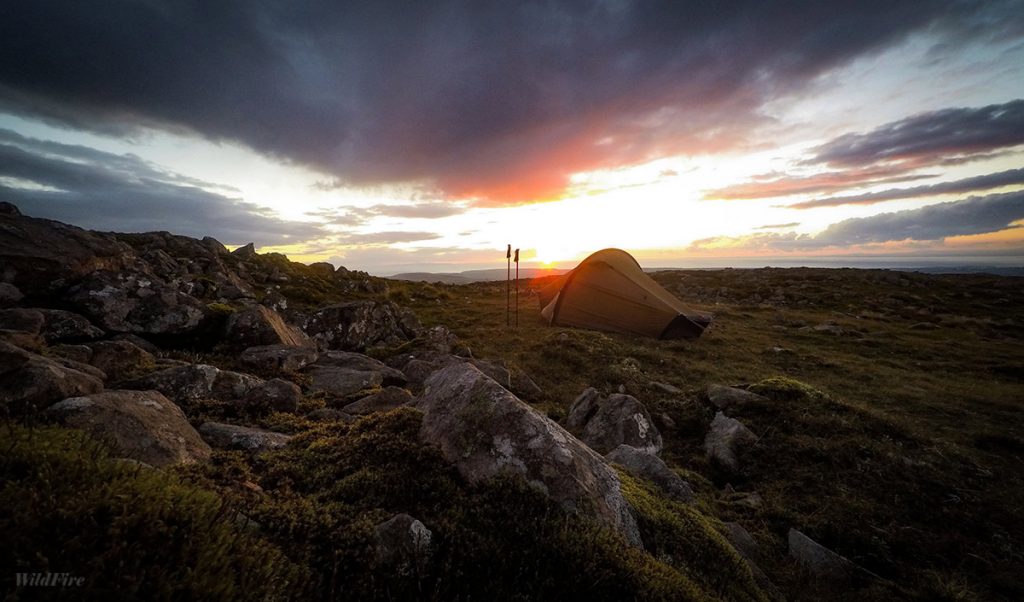
Wild camping has a way of stripping life back to its bones. No reception, no humming appliances, no chlorinated water, no EMF, no long list of things that seemed urgent at home but suddenly feel faintly ridiculous once you are on a hillside with a stove, a sleeping bag and the last of the light draining out of the sky. For some, that might sound uncomfortable, but for others, it’ll sound like freedom. The truth is that wild camping is both a challenge and a reward, and that is exactly why so many of us are drawn to it.
Wild camping strips life back to the essentials
One of the biggest benefits of wild camping is how quickly it simplifies things. At home, life has a way of becoming crowded. There is always something to answer, something to sort, something to buy, fix, charge or remember. Even rest can start to feel cluttered. Wild camping cuts straight through that.
As a hiker, you’ll know that being outside, planning a route, making it happen and getting back in one piece refreshes you. Once you are out on the hill with an intention to sleep out there, life becomes surprisingly straightforward. You need shelter, warmth, food, water and a decent place to stop for the night. That is about it. Instead of being pulled in ten directions at once, your mind is focused on a few simple things. Find a good pitch. Get the stove on. Watch the light fade. Settle in. Sleep.
That simplicity can feel like relief. It is not hardship in the way some people imagine. It is more like being reminded that a lot of what fills modern life is not as necessary as it pretends to be.

Sleeping on a hill gives you peace
People often talk about peace and quiet, but the peace you get from wild camping is not the same as sitting indoors with the television off. It has a different quality to it. The outdoors is never silent, but its sounds tend to settle the mind rather than crowd it.
A breeze moving across the tent, rain on the flysheet, a sheep calling somewhere in the darkness, birds as the sun rises, the low hush of the hill at night. These things don’t feel intrusive. They feel part of the place. For many people, a night outdoors creates more calm than a dozen evenings spent trying and failing to switch off at home.
That is one of the strongest mental benefits of camping outdoors. It gives your mind less to wrestle with. There is less input, less interruption and less pressure to be doing something all the time. After a while, thoughts begin to slow down. Things that felt loud indoors begin to lose a little of their weight.
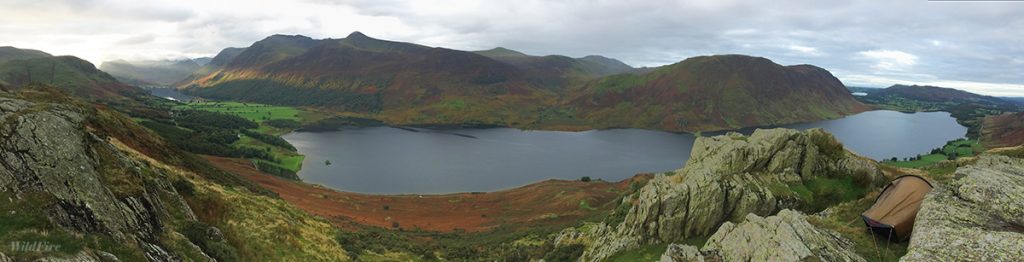
I got to Buttermere very late in the day. Climbed up the side of Rannerdale Knotts in the dead of night using with a map and compass and worked out where the top was. I pitched the Akto, most of the pins had to be lodged in a crack or something like. Next morning the first rays shining either side of Fleetwith Pike brushing along the side of High Stile were stunning. I wish I could have slowed time down. I didn’t even think of the camera. That wonderful moment seemed to come and go in a blink. Something I’ll always remember.
Lying in a hammock in the woods helps you feel more present
There is something about sleeping outdoors that pulls you into the moment. You notice the direction of the wind whistling through the trees. You feel the temperature dropping as the sun goes. You pay attention to the ground beneath you, the weather rolling in, the changing colour of the sky, a spider on a cord in the morning spinning a web. You become aware of things that usually sit in the background of life unnoticed. Life becomes beautiful again.

That matters more than it might sound. A lot of people spend most of their time either rushing ahead or mentally circling around what has already happened. Sleeping in the wild interrupts that pattern. It puts you exactly where you are. On a ridge. In a hollow. On a fellside. In the last light. Waiting for the kettle to boil.
It is hard to spend a night outside and not notice more. And often, noticing more is half the cure for feeling dulled by routine.
Camping outdoors builds confidence and self-reliance
Another of the real benefits of pitching a small piece of thin material to sleep under is the quiet confidence it builds. You carry what you need, make decisions for yourself and deal with the conditions as they are, not as you would prefer them to be. Even a simple overnight camp asks you to use judgement.
You choose where to pitch. You decide whether you are sheltered enough. You sort your layers, your food, your water and your timing. You wake up and pack away and get yourself moving again. None of that is heroic, but it is valuable, it kept you alive, hopefully comfortable. It reminds you that you can manage well with less, and that you don’t need everything softened by convenience in order to enjoy yourself.
There is satisfaction in that. It is not loud or showy. It is the quiet sort, the kind that sits in the background afterwards and makes you feel a little more capable in the rest of life too.

Pitching a tarp and hammock gives you focus. There are quite a few challenges to overcome in setting up your rig. I’m sure most people watch a few YouTube videos, learn what they need to do, then get out in the woods and hope they can remember enough to get it dialled in without it collapsing. In the photo above: I went through the process with Lindsy, then she set her own tarp up. She didn’t mention her electric bill or what she was doing at work on Monday the whole time.
You experience the landscape in a deeper way
Walking through a place is one thing. Sleeping in it is another.
That is one of the joys of wild camping in the UK, especially in upland areas. Everyone’s talking about going abroad to a nice sun-drenched beach with a load of bars queuing up along the coast for you cash. You’re remembering the privilege of hearing the beautiful sound of that woodpecker at 5 o’clock in the morning in the Forest of Bowland or the first sun rays like lasers shooting the trees.
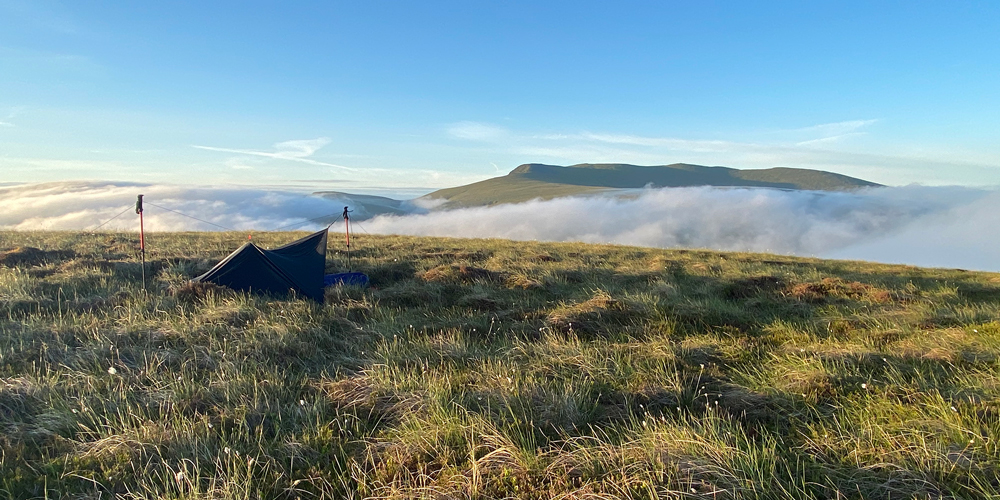
You don’t just see the landscape during the busy middle of the day. You see it at the fringes, when it’s best dressed. You watch the last light slide off the fells. You wake to that pale, steady light that slowly turns the world back on. You see cloud inversions down in the valleys. Even a familiar place can feel completely different at those times.
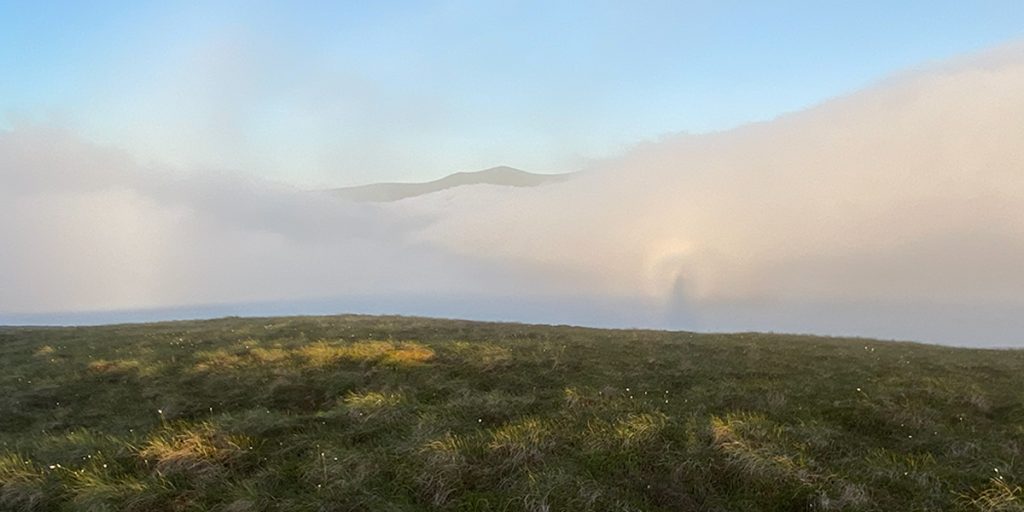
Once in a while you’ll take a photo of a cloud inversion like that, facing Blencathra, turn around to face Skiddaw and be handed a gift that nobody else can ever see, your brocken spectre.
When you stay out, the hills stop being scenery and become somewhere you are actually living in, however briefly. A summit or tarn or ridge that might otherwise have been just another point on a route becomes more memorable because you have stayed with it. You have watched it change. You have heard it in the dark and seen it wake again in the morning.
That deeper connection is one reason we keep wild camping. It turns a place from somewhere you visited into somewhere you knew intimately for a little while.
Wild camping can make walking feel more meaningful
A walk with a wild camp built into it has a different shape to an ordinary day walk. While other hikers are rushing down the hillside to get to the car as if the darkness is going to eat them alive, you can take your time because you’re already where you need to be. There’s more sense of travelling through the landscape properly. The camp becomes part of the route, part of the story of it, not just somewhere to sleep.
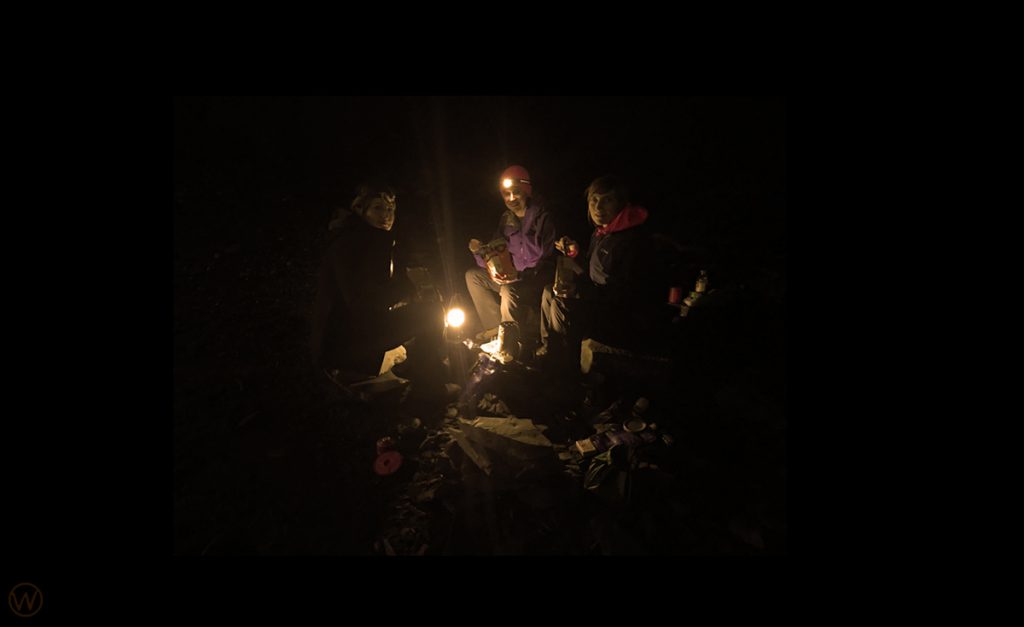
It changes your pace. It lets you stop longer. Sit longer. Watch longer. Take your time. A simple meal or a brew can feel strangely memorable when it has been carried up a hill and made in a quiet spot with a wide view. Things don’t need to be elaborate to feel special outdoors. In fact, they often feel better because they are so simple.
That is another overlooked benefit of wild camping. It sharpens your appreciation of ordinary things. Warm food. Dry socks. A flask. A level pitch. First light. They all seem to mean more.
It helps build relationships
Of course, taking your kids with you gives them that experience quite a few years earlier than you probably did. They’re relying on you, and when you deliver there trust in you grows. They see you as resourceful, resilient and one day you’ll see their open-mindedness shine through.
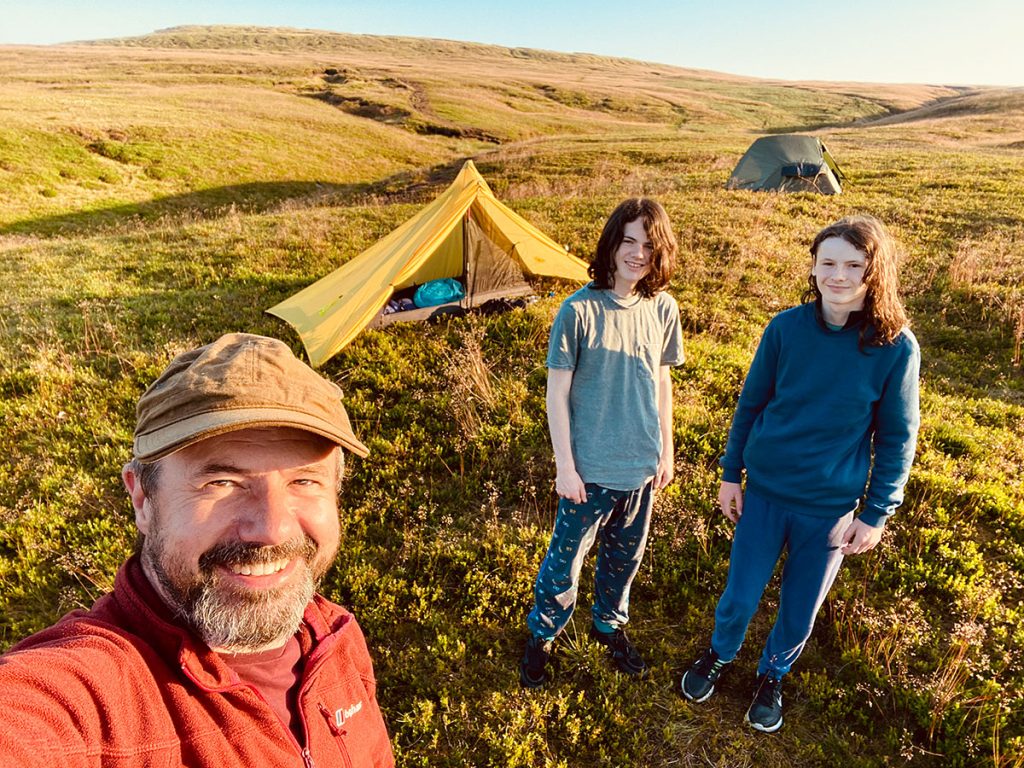
Sleeping around them in the open landscape gives you a great opportunity to teach them a few basic skills as well like using a stove, tying knots and burying their own sh!t.
There is value in the mild discomfort too
Wild camping is not always cosy, and that is not necessarily a flaw in it. Sometimes the ground is hard. Sometimes the wind sounds like Tolkien’s Rock Giants hurling boulders in a storm. Sometimes you wake up cold, a bit stiff, or questioning a pitch that looked better the night before.
Within reason, that discomfort has value. It teaches resilience. It reminds you that not every worthwhile experience needs to be polished smooth. In fact, some of the most memorable nights are the ones that were not perfect. Rough-edged enough to feel like you’ve endured something (that’s not the aim of course).

Modern life can make comfort feel like the default setting for everything. We’re spoiled with central heating, microwaves, even a tap – while wild camping nudges against that. It shows that a bit of discomfort is not the end of the world, and that satisfaction often sits on the other side of effort.
It offers perspective that is hard to find elsewhere
Perhaps the biggest benefit of wild camping is perspective. Not because it solves your problems, but because it changes the scale of them. A lot of what feels urgent indoors loses a bit of force under a big sky. The mind stretches out. The world seems larger again. So why not get your head down on a 450 million year old volcanic ash boulder field? Broaden one’s horizons.
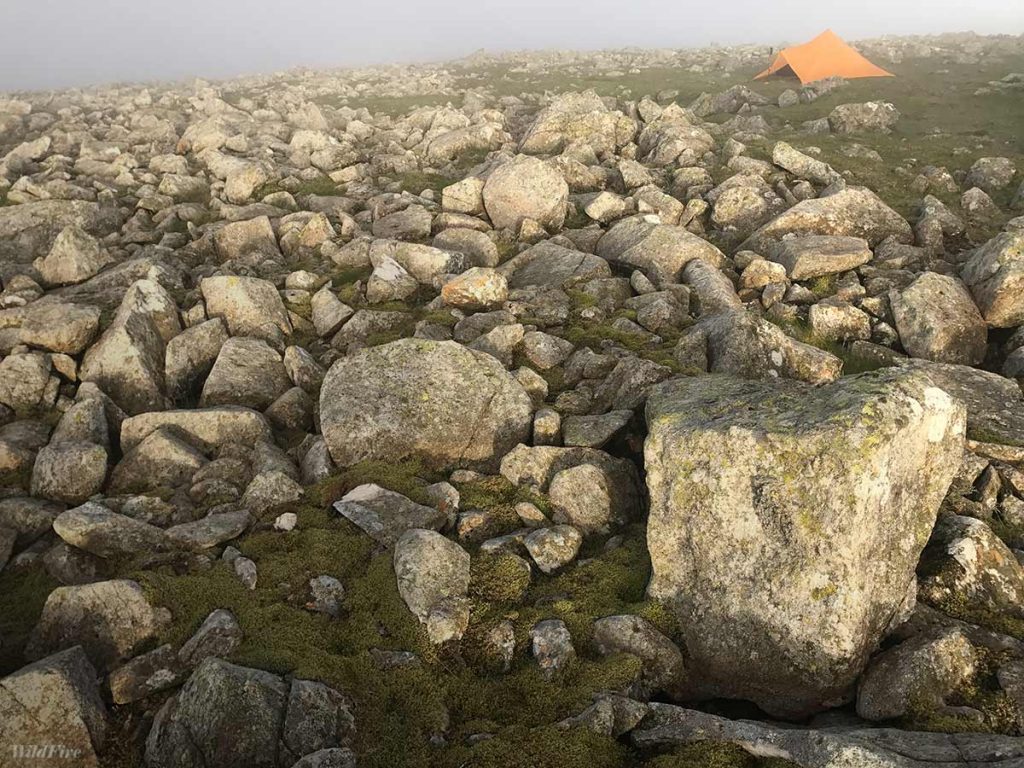
That is part of why people come back from a night outdoors feeling better in themselves. Their life may be exactly the same as it was the day before, but they are seeing it from a slightly different place. Their head feels clearer. Their thoughts feel less cramped. Things that had been pressing in on them seem more manageable.
Wild camping doesn’t need to be dramatic to do that. One quiet night in the hills is often enough.
You also get to experience things people just don’t do
Sitting on the sofa every night eating Cheetos isn’t my idea of adventure. I want to get out and do the sort of things that make people question whether they heard you right when you tell them.

One of the real joys of wild camping is that it gives you experiences most people will simply never have. Your mates, neighbours or work colleagues will never know what it feels like to bed down somewhere unusual, wake before the world stirs, or watch darkness and first light from a place most people would never think to spend the night.
I slept in the Priest Hole cave way up Dovedale with my friend John. It took us until the early morning to find the hole in the cliff face and enjoyed a -15c night. Half a dozen hours later we wake, looking out of the most amazing window you could imagine.

It is not just about where you sleep, but the feeling of stepping outside ordinary life for a while and doing something a bit raw, a bit memorable and completely different to the everyday. Sleeping at Alfred Wainwright’s literal final resting place, beside a frozen Innominate Tarn felt like a privilege but eerie.

Coming down off Ben Lawers after experiencing 77mph winds on the summit I spent the night in a shielding where a family once lived before the English turfed them out during the Highland Clearances 200 years ago.
That is part of what makes wild camping so special. It gives you moments that feel uncommon, slightly bold, and entirely your own.

Expecting to see legions of Roman soldiers marching up the Hard Knott Pass during the early hours, I pitched in the Commandant’s House in the Hard Knott Castle Roman Fort. Nobody turned up.

And after a long hard day for me from Honister out to Kirk Fell (via Fleetwith, Hay Stacks, Grey Knotts, and Brandreth), I summitted Great Gable in the darkness to then pass over Green Gable and camp on the summit of Base Brown using the 450 million year old pyroclastic ash in the ‘door way’ to shield me from the wind.
Why do it?
Because wild camping offers peace, simplicity, perspective and freedom in a way very little else does. It slows you down. It sharpens your senses. It brings you closer to the landscape and, in a strange way, closer to yourself as well. You spend a night with fewer distractions, fewer comforts and fewer barriers between you and the world around you, and often come back feeling better for it.

In a nutshell then, How will you benefit?
You will probably come home a little tired, perhaps a bit grubby, and ready for a proper breakfast. But you may also come home with a clearer head, lighter thoughts and that steady satisfaction that comes from having spent time outdoors properly, not just visited it for a few hours. That is why we do it. Not because it is glamorous, and not because it is easy, but because it gives something back.

Wild camping gets you out of the noise. And every now and then, that is exactly what a person needs. Even if your wife tells you it’s time to pack your bags, your sister just died, you had to close down your business, your daughter thinks you abandoned her, your mate turns out to be a d!ck or the neighbour’s dogs piss you off howling at 7 o’clock in the morning, wild camping is always there for you – every single time.
Read Next…

Wild camping in the UK – An introduction
Interested in learning more? Well before you start ordering kit, have a read of my introduction to wild camping in the UK. A few minutes and you’ll know all the basics.